Zones of Regulation

Here at St. Wulstan's, we recognise the importance of promoting positive mental health and emotional wellbeing to our students and their families. We aim to create an open culture around the discussion of mental health and wellbeing and to empower our children be able to regulate their emotions. By implementing the Zones of Regulation curriculum, we aim to teach our pupils to identify emotions in themselves and others and provide them with bank of strategies to help regulate their emotions and improve their wellbeing.

The Zones of Regulation is a range of activities to help your child develop skills in the area of self-regulation. Self-regulation can go by many names, such as self-control, self-management and impulse control. It is defined as the best state of alertness of both the body and emotions for the specific situation. For example, when your child plays in a basketball game, it is beneficial to have a higher state of alertness. However, that same state would not be appropriate in the library.

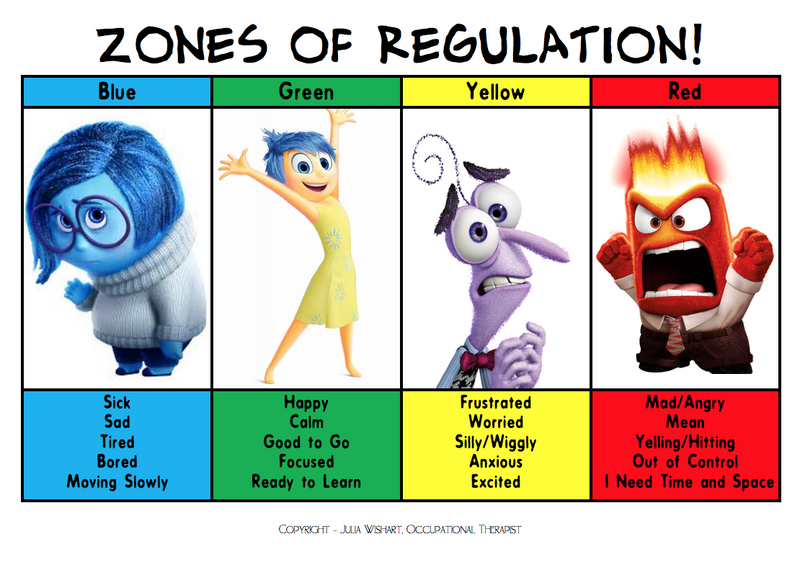
The Zones of Regulation is a curriculum based around the use of four colours to help children self-identify how they’re feeling and categorise it based on colour. The curriculum also helps children better understand their emotions, sensory needs and thinking patterns. The children learn different strategies to cope and manage their emotions based on which colour zone they’re in. Additionally, the Zones of Regulation helps children to recognise their own triggers, learn to read facial expressions, develop problem-solving skills, and become more attuned to how their actions affect other people.

There is progression across the curriculum with children in Early Years learning to identify different emotions to children in Upper Key Stage 2 discussing how our behaviour can impact upon the feelings of those around us.

Please read our guide to the Zones of Regulation at the bottom of the page.  If you have any questions, please ask your child’s class teacher.

Understanding the Zones

image

Blue Zone


What is the Blue Zone?

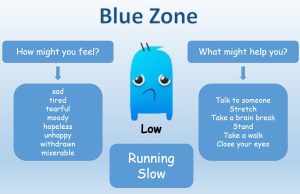
The blue zone is used when a person is feeling low states of alertness or arousal.

When you’re in the blue zone you may be feeling down – sad, sick, tired, or bored. You’re still in control, as you are in the yellow zone, but with low energy emotions.

How would your child present in the Blue Zone?

  • absence of feelings
  • irritability
  • lack of pleasure
  • lack of motivation
  • tearful
  • withdrawn
  • difficulty in concentrating
  • How might your child be feeling in the Blue Zone?

What coping strategies do we implement in school?

  • Exercise
  • Alerting sensory breaks
  • Reflecting on what makes us happy
  • Talking to our teachers and friends

Stories to read at home

https://drive.google.com/file/d/1kjBMHg3bvU5ZQNtvgg7jUSXxaVSlhgIl/view?usp=share_link
What strategies can you use at home?

  • Listen to upbeat music
  • Complete some cardio based exercise
  • Get up, get showered and get dressed
  • Jump on a trampoline
  • Talk to a friend
  • Do something creative
  • Cuddle or play with pets.
  • Go for a walk
  • Plan a fun activity
  • Look through old photographs or snap some new ones.
  • Re-watch a funny or inspiring YouTube video.


Green Zone

What is the Green Zone?

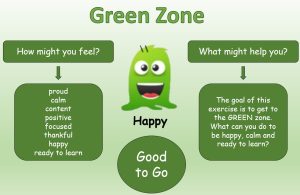
The green zone is used to describe when you’re in a calm state of alertness.

Being in the green zone means you are calm, focused, happy, or ready to learn. This is predominantly the state you want your child to be in. It’s also the state most needed in the classroom in order to learn.

How might your child present in the Green Zone?

  • Calm
  • Focused
  • Happy
  • Content

What strategies do we implement in school to keep children in the Green Zone?

  • Implement daily sensory breaks
  • Sensory areas on the playground/in class
  • PSHE lessons
  • Mindfulness activities
  • Circle time
  • Use a positive behaviour policy
  • Encourage a healthy lifestyle
  • Teach children how to keep fit

Stories to read at home

https://drive.google.com/file/d/1kjBMHg3bvU5ZQNtvgg7jUSXxaVSlhgIl/view?usp=share_link

What strategies can you use at home?

  • Organise your clothes for school the night before to prevent stress
  • Spend time with your friends and family
  • Take time out to do something you love to do
  • Eat healthy and nutritious food
  • Drink plenty of water
  • Get 8 hours+ sleep


Red Zone

What is the Red Zone?

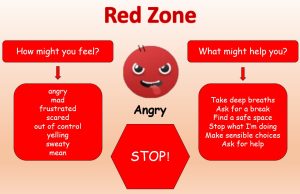
The red zone describes an extremely heightened state of intense emotions. When a person reaches the red zone, they’re no longer about to control their emotions or reactions.

This is the zone children are in during meltdowns. Being in the red zone means you’re feeling anger, rage, terror, or complete devastation and feel out of control.

How might your child present in the Red Zone?

  • Excessive outbursts
  • Fighting
  • Shouting
  • Irritability
  • Acting dangerously
  • Lack of control
  • Resentful

What coping strategies do we implement in school?

  • Take time out
  • Use a stress ball/identified tool
  • Use the calm corner
  • Time to talk through our thoughts, feelings and behaviours
  • Breathing strategies

Stories to read at home

https://drive.google.com/file/d/1kjBMHg3bvU5ZQNtvgg7jUSXxaVSlhgIl/view?usp=share_link

What strategies can you use at home?

  • Talk to an adult
  • Hug a teddy
  • Pop bubble wrap
  • Wrap your arms around yourself and squeeze
  • Write down what’s bothering you and rip it up
  • Squeeze a stress ball
  • Talk about it
  • Scribble on paper and crumple it up
  • Use breathing techniques
  • Do stretches
  • Listen to calming music
  • Take time out
  • Use sensory glitter jars


Yellow Zone

What is the Yellow Zone?

The yellow zone describes when you have a heightened sense of alertness.

This isn’t always a bad thing, and you typically still have some control when you’re in the yellow zone. Being in the yellow means you may feel frustrated, anxious or nervous. But, it could also mean you’re feeling excited, silly, or hyper – which is okay in the right situations.

How might your child present in the Yellow Zone?

  • Avoiding situations
  • Avoiding social settings
  • Biting nails
  • Sleeping issues
  • Tearful
  • Struggling to concentrate
  • Hyper-vigilant

What coping strategies do we implement in school?

  • Breathing strategies
  • Mindfulness
  • A ‘brain break’

Stories to read at home

https://drive.google.com/file/d/1kjBMHg3bvU5ZQNtvgg7jUSXxaVSlhgIl/view?usp=share_link

What strategies can you use at home?

  • Breathing techniques
  • Take time out
  • Relaxing exercises e.g. yoga/ stretches
  • Meditation
  • Keep a journal
  • Make a worry monster
  • Listening to calming music


Talk through the zones with your child. Ask them how they would feel in each zone?

  • Discuss what emotion they feel in each zone e.g. in the yellow zone I may feel worried
  • How they physically feel e.g. in yellow zone I may have butterflies in my stomach or have sweaty palms (if feeling anxious).
  • Then discuss what might they be doing- what be their actions e.g. in yellow zone would they be pacing around, snapping at others, fidgeting?
  • Then discuss how to help them move into the Green zone e.g. if I was in the Yellow zone and feeling anxious I might find competing some yoga stretches/ breathing techniques helps me get back into the green zone.
  • Create a list of strategies that work for the child- Remind the child that we are all unique and the strategies that work for one person might not help them so they need to think about what would help them.

Remind them that we will experience all zones and there are no good or bad zones- however our success in regulating our emotions depends on us recognising our emotion, understanding it and putting a support strategy in place.


Zones of Regulation Booklet for parents

Suggested Books

the_zones_book_nook_aug2020